Sleep Science & Mattress Design
Inside Vispring Mattress Construction: Pocket Springs, Comfort Layers, and Support
A mattress is a small piece of engineering disguised as furniture. Its springs, fabrics, and cushioning layers work together beneath the sleeper, though the result is felt less as a list of components than as a simple question at bedtime: does this feel right?
Published November 22, 2026
Vispring is associated with the pocket-spring mattress: a system in which individual springs sit in fabric pockets and respond, to a degree, independently to pressure. It is an appealing idea, both mechanically and intuitively. A body is not a flat, evenly weighted object, and a mattress that can yield in one place without making the whole surface move seems, at first, to promise a more considerate kind of support.
But a pocket-spring mattress is not simply a collection of springs. The springs have a height, a gauge, a shape, an arrangement, and a degree of tension. Above them may lie several layers of natural or synthetic materials, each with its own resistance, warmth, and capacity to recover after compression. Beneath them is a base whose construction can change how the mattress performs. The cover, quilting, and finishing materials also affect the first impression of firmness and the way the surface behaves over time.
Understanding these elements makes it easier to compare mattress designs without mistaking a specification for a verdict. A larger spring count, a thicker comfort layer, or a prestigious material does not automatically make a mattress the right one for every person. The useful question is how the whole construction responds to a particular sleeper, sleep position, and preference for surface feel.
What a pocket spring does
In a conventional open-coil system, springs are connected so that movement in one area can be transmitted to neighboring coils. A pocket-spring mattress takes another approach. Each coil is enclosed in its own fabric sleeve, and the pocket helps limit direct contact and movement between springs. When a sleeper presses down, a group of nearby springs compresses under the load, while those farther away may move less.
“Individually responsive” is a useful description, but it should not be mistaken for literal independence. Springs are held together by the mattress’s overall construction, and the comfort layers above them distribute pressure across the surface. The foundation below also matters. The result is a coordinated system, not a set of tiny, unrelated mechanisms.
The potential advantage is localized response: the mattress can adapt to differences in pressure across the body. A shoulder and hip press into the surface differently from a waist or lower leg. A responsive spring unit may allow those areas to settle at different depths, rather than asking the sleeper to conform to one uniformly moving plane. Whether that feels supportive depends on the person and on the materials surrounding the spring unit.
Pocket springs are also often discussed in connection with reduced motion transfer. Because the coils are not all directly wired together, movement on one side may be less noticeable on the other than it would be on some interconnected designs. This is a tendency, not a guarantee. The comfort layers, the mattress’s size and construction, the bed base, and the sensitivity of the person sharing the bed all influence what is felt.
Spring count is not the whole story
When comparing a pocket spring mattress, it is tempting to treat the number of springs as a quality score. It is not. A higher count can result from smaller springs or from counting conventions that differ between manufacturers. It may indicate a more finely divided spring arrangement, but it does not by itself establish how supportive, durable, or comfortable the mattress will be.
Several other details deserve attention. The gauge of a spring describes the thickness of its wire; a thicker wire is generally stiffer, though the spring’s shape and design also influence its response. Spring height, coil turns, tension, and the way the unit is zoned or arranged can further alter the feel. Even two mattresses with a similar count may behave differently if their springs are made to different specifications or are paired with different comfort materials.
Construction descriptions sometimes refer to zones. In broad terms, zoning means that parts of the spring system are designed to respond differently in selected areas. The intended effect is to accommodate variations in body weight or shape, but the word alone tells a reader little. Ask which areas are zoned, how the variation is achieved, and whether the manufacturer provides enough information to compare it with another design.
In Vispring’s case, as with any manufacturer, model details matter. The brand name identifies a maker, not one universal mattress recipe. Spring configuration, firmness options, upholstery layers, and available sizes can vary across a range. A responsible comparison begins with the specifications of the exact model under consideration, rather than assumptions drawn from a general description of pocket springs.
The springs are only the beginning
A sleeper does not lie directly on a spring unit. Between the body and the coils sits a comfort system: a combination of padding, upholstery, and surface materials that shapes the first response to pressure. This system can make a mattress feel plush, firm, springy, or restrained before the deeper support structure has had much chance to announce itself.
Comfort layers can include wool, cotton, hair, latex, foam, or other fibers and materials, used alone or in combination. Each has a different feel and pattern of compression. Some materials yield readily and create a cushioned surface. Others are more resilient, returning toward their original shape quickly when pressure is removed. A layered mattress may use several materials to balance these qualities, although the words “natural” or “premium” do not, on their own, predict the experience.
The thickness and density of a layer matter, but so do its placement and relationship to the layers around it. A soft material directly beneath the cover may give a mattress an inviting, cushioned first impression. A firmer layer beneath it may limit how far the body settles. Reverse the order, alter the thickness, or change the material, and the same spring unit can feel quite different.
Quilting and ticking—the fabric cover and its stitched or padded finish—belong to this conversation, too. A quilted surface can add a little softness and affect how readily the sleeper feels the structure below. The cover also has practical duties: it protects the interior, contributes to breathability, and influences how heat and moisture move near the body. A mattress’s uppermost layer may be the first thing noticed, but it is not the entire comfort system.
Descriptions such as “soft,” “medium,” and “firm” are useful only as rough landmarks. They are not universal measurements, and a firmness label cannot tell a person precisely how the mattress will feel in their own bedroom. The same model can feel firmer on one foundation than another, and different bodies can experience the same surface in notably different ways.
Support, firmness, and the sleeper’s body
In ordinary conversation, firmness and support are often treated as synonyms. They are not. Firmness is largely a description of the surface sensation: how much resistance is felt when someone first lies down. Support concerns how the mattress holds the body over time and whether it allows the sleeper to settle in a way that feels stable and comfortable.
A very firm mattress can still feel poorly matched if it creates uncomfortable pressure at the shoulder or hip. A softer surface may feel pleasant at first but allow one sleeper to sink farther than they prefer. Neither outcome can be inferred reliably from spring count alone. The complete mattress—spring system, padding, cover, and base—determines the experience.
Sleep position offers a starting point for thinking about fit. Side sleepers often notice pressure at the shoulder and hip, because those areas meet the mattress more directly. They may prefer a surface that permits some contouring without letting the body feel unstable. Back sleepers may be more attentive to how evenly the mattress supports the trunk. Stomach sleepers sometimes prefer a surface that limits excessive sinking through the middle of the body. These are tendencies, not rules: body shape, personal comfort, and past experience complicate any tidy formula.
Body weight can change how deeply someone compresses a mattress and, therefore, which layers they engage. A surface that feels firm to one sleeper may feel more yielding to another. Couples, too, face a practical balancing act: one mattress must accommodate two bodies that may differ in weight, position, and preferred feel. In such cases, the experience of both sleepers matters more than an abstract idea of the “correct” firmness.
It is useful to distinguish a mattress that feels unfamiliar from one that consistently feels uncomfortable. A brief test in a showroom can reveal a first impression, but it cannot reproduce a full night of sleep. If a trial period is available, read its terms carefully. Give the mattress a reasonable opportunity to be assessed under ordinary conditions, while keeping notes about pressure, temperature, ease of movement, and how the body feels on waking. Persistent pain or sleep problems warrant professional medical advice rather than a guess based on mattress marketing.
Why the bed base belongs in the comparison
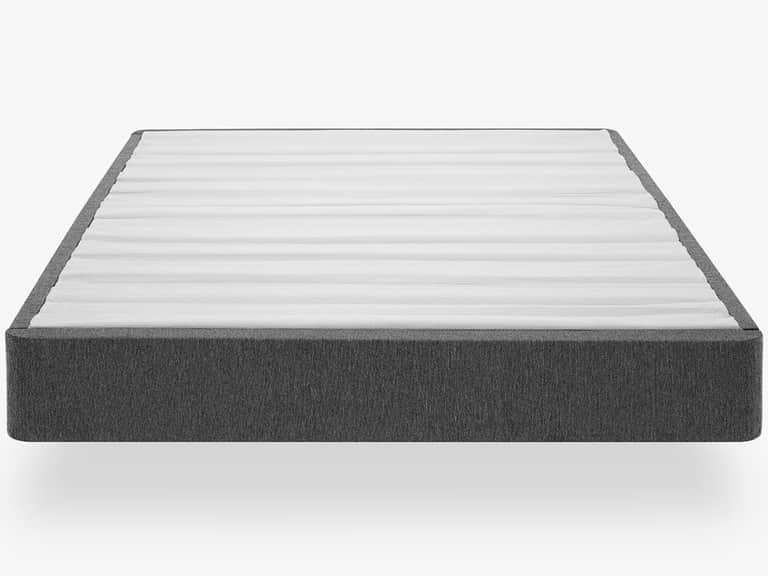
The mattress does not operate in isolation. A base provides the platform against which its springs and comfort layers work. A suitable foundation should offer stable, even support and should follow the mattress maker’s requirements. Slats, a platform, or a dedicated foundation may each produce a different overall feel, depending on their spacing and construction.
Too much flex beneath a mattress can alter how it responds; so can a surface that is unusually rigid. Slat spacing matters because a mattress may require support at regular intervals to avoid unsupported gaps. Before choosing or changing a base, check the specifications for the mattress model. A mattress designed for one kind of foundation should not be assumed to perform identically on another.
This point is easy to overlook because a base is usually less visible than the mattress. Yet a spring system is a structure that needs a reliable platform. In a comparison of mattress designs, the foundation should be treated as part of the sleeping system, not as a decorative afterthought.
How to read mattress specifications
Specifications are most helpful when they answer questions that can be compared across models. Before being impressed by a long list of materials or a large spring count, look for the essentials: the spring type and configuration, the stated firmness options, the materials in the comfort layers, the mattress height, the compatible foundation, and the care or maintenance guidance.
- Identify the exact model. Brand-wide descriptions may cover products with different constructions.
- Separate the spring unit from the comfort layers. Each contributes differently to the mattress’s feel.
- Ask what a number represents. Spring counts are meaningful only when the counting method and size are clear.
- Look for material and layer details. A material name without information about its position or role is an incomplete account.
- Check the foundation requirements. The bed base can affect both support and performance.
- Review practical terms. Warranties, delivery, trial periods, and care instructions are part of the decision.
When details are missing, that absence is itself useful information. It does not prove that a mattress is poorly made; it simply makes direct comparison more difficult. A clear question—what is inside the comfort layer, or which foundation is recommended?—is often more valuable than another adjective in a product description.
Pocket springs and latex: different routes to a feel
Comparing a pocket-spring design with a latex mattress can help clarify what the spring system contributes. Latex mattresses use an elastic material to provide support and surface response rather than relying on a pocketed coil unit as the central support structure. A latex core may be layered with different firmnesses, and the cover and quilting still influence how the surface feels. The experience is not reducible to a simple opposition between “bouncy springs” and “soft foam.”
For a concrete example of a different construction approach, the Royal-Pedic Natural Latex Quilt-top Mattress is described as having an eight-inch natural latex core, with a six-inch firm layer and a two-inch medium layer, together with cotton and wool components. That description illustrates how a mattress can use layered materials to shape feel without making pocket springs its central support system. It is a comparison of construction, not a claim that one design is better for every sleeper.
The useful choice is not a contest between technologies. It is a question of response: how quickly the surface gives way, how much it contours, how readily it rebounds, how warm it feels, and whether the sleeper feels comfortable and steady in a preferred position. A person who likes the distinct give of a particular spring-and-upholstery combination may dislike the feel of latex, or the reverse. The labels point toward a design; they cannot replace experience.
A more useful way to compare Vispring mattresses
When looking at Vispring mattress construction, begin with the particular model rather than the reputation of the category. Read its spring and upholstery specifications together. Consider the surface sensation and the deeper support as separate parts of the experience. Then test the mattress, where possible, in the positions in which you actually sleep.
Take a few minutes in each position. Notice whether the shoulder or hip feels pressed, whether the body feels level and settled, and whether turning over feels easy or laborious. If sharing the bed, include the other sleeper in the assessment. Ask whether movement is noticeable across the surface, but remember that a short test offers only an impression, not a definitive measurement of motion transfer.
Finally, confirm that the mattress is paired with an appropriate base and that the practical terms fit your needs. A finely described spring unit cannot compensate for an incompatible foundation, just as a celebrated upholstery material cannot guarantee personal comfort. The construction matters, but it matters as a system.
The quiet work of a mattress
A mattress earns its place less through the drama of its specifications than through the routine of being used. Pocket springs provide a particular way of organizing support, allowing parts of the bed to respond to pressure with some local independence. Comfort layers soften, cushion, and temper that response. The cover, the foundation, the sleeper’s body, and the sleeper’s habits all complete the arrangement.
For anyone researching a Vispring mattress, the most reliable path is neither to worship a spring count nor to dismiss one construction as universally superior. Look at the exact model. Understand what the springs do and what the layers add. Match those details against your preferences, sleep position, and sense of comfort. In mattress design, as in sleep itself, the most convincing answer is often the one that works quietly, night after night.