Sleep science and bed ergonomics
Latex Mattress Layers: How Natural Materials Shape Support and Feel
A latex mattress may feel springy, gently contouring, or unexpectedly firm. The difference is rarely captured by a single label. Layer thickness, latex density, the arrangement of materials, and the bed beneath the mattress all contribute to the experience.
Published October 20, 2026
There is a particular kind of surprise in lying down on latex for the first time. Instead of sinking slowly into a surface that seems to remember the shape of a shoulder, a sleeper may feel lifted—held near the top, with a little give beneath the hips and a quick return when they move. The sensation is often described as buoyant or responsive. Those words are useful, but incomplete. A latex mattress is not one uniform material, and its feel is not guaranteed by the word latex on a label.
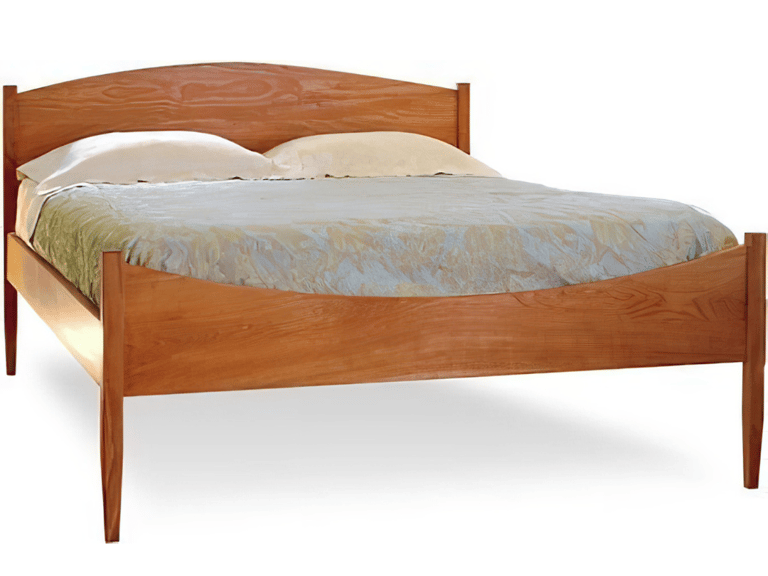
Mattresses are layered objects, and the layers have jobs. A comfort layer meets the body and softens the first contact. A support layer carries more of the sleeper’s weight and helps limit excessive sinking. Between them, transitions may be subtle or pronounced; the cover can add a little cushioning or restrict how freely the surface flexes. Even the foundation matters. A mattress that behaves one way on a rigid platform may feel different on a flexible base.
Understanding that construction makes it easier to compare latex mattresses on their actual characteristics rather than on broad promises about firmness, naturalness, or pressure relief. The practical question is not simply whether latex is comfortable. It is how a particular arrangement of materials responds to a particular body, sleeping position, and bedroom.
What latex contributes to a mattress
Latex foam is made by processing natural rubber, synthetic rubber, or a blend. Natural latex is derived from rubber tree sap, but the presence of the word natural does not, by itself, tell you how much natural material a finished mattress contains. Construction and labeling vary, so buyers who care about composition should look for clear, specific disclosures and relevant certifications rather than treating a product name as a full materials list.
In a mattress, latex is valued partly for its elastic response. Press into the surface and it tends to compress under that pressure; release it, and it rebounds relatively quickly. That response can make changing positions feel easy, because the sleeper is not waiting for a deep impression to recover. At the same time, latex can spread load across a broader area and soften contact around shoulders, hips, and other pressure-sensitive points.
These qualities are not opposites. A material can feel supportive while also yielding locally. But their balance depends on the design. A thin, firm latex layer over a strong support core may produce a distinctly buoyant surface with limited sink. A thicker or softer comfort layer may allow more contouring. If the support beneath it is poorly matched to the sleeper’s weight or posture, even a plush top can feel unsatisfying.
Labels such as “soft,” “medium,” and “firm” offer a starting point, not a complete forecast. They are not always measured consistently between manufacturers. A firmness rating also cannot reveal whether a mattress has one latex layer or several, how thick the upper layer is, or how the mattress responds under different parts of the body. Two mattresses carrying the same rating may feel quite different once someone lies down.
The work done by each layer
The comfort layer: first contact
The uppermost layer has an outsized influence on a mattress’s first impression. It is where the shoulder and hip encounter the bed, and where a sleeper notices whether the surface feels firm, yielding, or plush. In a latex mattress, a thinner comfort layer can keep the sensation lively and close to the surface. A thicker one may permit more compression before the body meets firmer material underneath.
Thickness alone does not determine softness. The latex’s firmness and density, the shape of its internal structure, the cover, and the layer below all affect how it compresses. A thick but relatively firm upper layer may not feel as plush as a thinner, softer one. Conversely, a soft layer can feel supportive if it is sufficiently deep for the sleeper and backed by an appropriate core.
The support layer: keeping the body from settling too far
Below the comfort surface, a support layer helps distribute weight and establish the mattress’s overall resistance. Its purpose is not to make the bed feel hard. Rather, it should provide enough underlying support that the sleeper does not sink excessively, particularly through heavier areas such as the pelvis. When the upper layers and support core work together, the mattress can cushion prominent pressure points while keeping the body in a comfortable, stable position.
When they do not, a mattress can feel pleasant for a few minutes and less convincing over a full night. A soft surface may allow too much sinking; a very firm one may leave the shoulder or hip bearing uncomfortable pressure. The outcome is personal, but the underlying question is consistent: does the mattress yield where it needs to, while resisting enough to keep the body from feeling unsupported?
Transitions, covers, and the base beneath
Some constructions use multiple latex layers with different characteristics. A transition layer can make the change from surface comfort to deeper support feel gradual rather than abrupt. Other mattresses rely on fewer layers and a simpler profile. Neither arrangement is inherently superior. The useful comparison is how the complete mattress behaves, not how impressive its layer count sounds.
The cover is part of that experience, too. A tightly quilted or thickly padded cover can soften the initial feel, while a less substantial one may let the latex’s response come through more directly. And the foundation is not an afterthought. The frame or base should be compatible with the mattress and provide appropriate, even support. A sagging or unsuitable foundation can undermine the feel of otherwise well-chosen materials.
Density, firmness, and the language of specifications
When comparing latex mattress specifications, density and firmness deserve separate attention. Density refers broadly to how much material is present in a given volume. Firmness describes how much resistance the layer offers under compression. The terms are related in some manufacturing contexts, but they are not interchangeable measures, and neither one alone predicts comfort or durability with certainty.
Specifications can be difficult to compare if manufacturers use different scales, testing methods, or terminology. Rather than trying to turn one number into a universal verdict, ask what the number means for that particular mattress. Does it describe a specific layer or the whole bed? Is the comfort layer softer than the support core? How thick is each layer? Is the material natural, synthetic, or blended, and is that information stated clearly?
These questions are more useful than assuming that “higher density” must mean “better” or that “natural latex” must feel a particular way. A carefully made mattress still needs to suit the person sleeping on it. Specifications can narrow a comparison, but they cannot replace a realistic trial, particularly for people with established preferences or sensitivity to pressure.
Pressure relief and sleeping position
Pressure relief is not a mysterious feature reserved for a particular material. It is the result of how the mattress supports the body’s weight over its contact area. A surface that is too firm for a sleeper may concentrate pressure around the shoulders and hips. One that yields too much may let the body settle in a way that feels unstable or strained. Latex can provide a combination of local give and resilient response, but whether it does so successfully depends on the individual construction and fit.
Side sleepers often place more weight on their shoulders and hips. They may prefer a surface that gives those areas room to settle without allowing the waist and torso to feel unsupported. Back sleepers may look for an even balance: enough cushioning at the lower back and hips, with a stable feel underneath. Stomach sleepers frequently want to avoid excessive sinking around the midsection, though preferences and body proportions vary. These are tendencies, not rules, and people often move between positions during the night.
Body weight also changes how layers respond. A sleeper who compresses a mattress only slightly may experience it as firmer than someone who presses more deeply into the same surface. That is one reason ratings based on a generic scale can mislead. Where possible, test the mattress in the position you actually use, and stay there long enough to notice whether the surface continues to feel comfortable after the initial novelty has passed.
If two people share a bed, their needs may differ. They can compare whether movement is noticeable, whether each person feels adequately supported, and whether the mattress has a divided or adjustable configuration. Latex’s quick recovery may feel responsive to one person and too springy to another. The right description is not the one that sounds most appealing; it is the one that corresponds to what the sleepers experience.
Temperature comfort: more than a material claim
People often look to latex when they want a less enveloping feel than some slow-recovery foams provide. Its buoyant response can make movement easier and may reduce the sensation of being deeply embedded in the mattress. But no material guarantees a cool night. Temperature comfort depends on the entire sleep system: the mattress construction, room climate, bedding, clothing, body heat, and individual sensitivity.
Layer thickness and cover materials can influence how heat and moisture are experienced at the surface. So can the sheets and blankets placed over the mattress. A breathable sheet may feel different from a dense, tightly woven one; a heavy comforter can overwhelm the effect of a mattress that otherwise feels relatively airy. It is sensible to treat claims about temperature as a reason to investigate construction, not as a promise that sweating or overheating will disappear.
For a warm sleeper, practical questions include whether the mattress has substantial quilting or other layers above the latex, what materials are used in the cover, and whether the bedding can be adjusted seasonally. A cooler bedroom and lighter bedding may prove more consequential than a subtle difference between mattress foams.
Sensitivity, care, and realistic expectations
Material sensitivity deserves direct attention. People with known allergies or reactions to rubber should not assume that a latex product is appropriate simply because the material is enclosed in a mattress. Processing, coverings, and exposure conditions differ, and personal medical advice may be important. If sensitivity is a concern, ask the manufacturer for precise information about the material and consult a qualified health professional rather than relying on broad marketing language.
Certifications may help clarify certain aspects of a product, but each certification has a defined scope. It is worth checking what a label actually verifies, and whether it applies to the latex, the finished mattress, or another part of the construction. A certification is informative when its meaning is understood; it is less useful as a general substitute for a complete materials description.
Care instructions also matter. Some mattresses are designed to be rotated, while others have a one-sided construction. Follow the maker’s guidance on cleaning, rotation, foundation compatibility, and protective covers. A protector can help guard against spills and everyday wear, though it may slightly alter the surface feel. The aim is not to preserve a mattress as an object untouched by use, but to maintain it according to its design.
A topper is not the same as a mattress
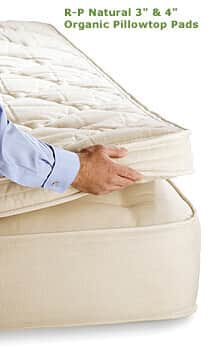
For someone who likes the basic support of an existing mattress but wants a different surface feel, a latex topper or pillowtop pad may be one option. It cannot correct every problem in the mattress beneath it, and it should not be mistaken for a full latex mattress: the base bed continues to determine much of the support. A soft topper on a sagging mattress, for example, may simply add another layer to an unstable surface.
The Royal-Pedic Natural Latex 3-inch Pillowtop Pad is an example of a separate cushioning layer rather than a complete mattress. Its listed construction includes a layer of natural Dunlop latex encased in cotton, with French wool quilting. At three inches thick, it is intended to add cushioning and pressure-point relief. Anyone considering a pad should check how it will fit with the existing mattress, how it is secured beneath sheets, and whether the resulting height and feel suit the bed. The description is a starting point, not a guarantee that the combination will work for every sleeper.
Questions to ask before comparing latex mattresses
A useful comparison begins with construction, then moves to experience. Product descriptions sometimes devote many words to a single material and few to the arrangement that gives it meaning. Ask for details that make it possible to understand the mattress as a system:
- How many layers are present, and what is the thickness of each one?
- Which layer is intended to provide initial cushioning, and which supplies deeper support?
- Is the latex natural, synthetic, or a blend, and is the composition clearly disclosed?
- What do the firmness or density specifications refer to, and how are they measured?
- What materials are used in the cover and any quilting above the latex?
- What type of base or foundation is recommended?
- Can the mattress be tested at home, and what are the terms for returns or exchanges?
- What care does the mattress require, and is it designed to be rotated or flipped?
The trial policy is not a minor administrative detail. Comfort is difficult to judge in a brief showroom visit, and the feel of a mattress may become clearer after repeated nights. Before purchasing, read the actual trial and return terms, including any fees, time limits, or conditions. A clear policy does not make the mattress more comfortable, but it makes the decision less dependent on a hurried first impression.
What the word “support” should mean
In mattress descriptions, support can be made to sound like a quality that exists independently of the sleeper. In practice, support is relational. A mattress supports a person, in a particular position, at a particular moment in life. A firm surface can feel reassuring to one sleeper and harsh to another; a softer surface can feel comfortable until the body sinks farther than expected.
It may help to distinguish support from firmness. Firmness is the sensation of resistance at the surface. Support is the broader experience of the body being held in a comfortable, stable position. A mattress can feel soft on top and supportive beneath, or firm at first contact yet uncomfortable at the shoulders. The terms overlap in everyday conversation, but they describe different parts of the experience.
Likewise, pressure relief does not mean eliminating all sensation of contact. It means distributing load in a way that feels comfortable for the sleeper. No material can promise relief from every source of pain, and a mattress is not a treatment for a medical condition. Persistent or worsening pain is a matter to discuss with a qualified clinician, especially when it disrupts sleep or daily activity.
A more useful way to choose
Begin with the experience you want, rather than a list of materials. Do you prefer to rest on top of the bed or sink into it? Is it difficult to turn over? Do your shoulders or hips feel compressed? Does your lower back feel unsupported? Are you consistently too warm? These observations do not diagnose a problem, but they can make a product comparison more precise.
Then connect those preferences to the construction. Someone seeking a more buoyant surface might compare the thickness and firmness of the comfort layer, the cover’s quilting, and the transition to the support core. Someone looking for more cushioning might consider a softer or thicker upper layer, while checking that the mattress still feels stable beneath the pelvis. For a warm sleeper, the cover, surrounding bedding, and room conditions deserve attention alongside the latex itself.
Most of all, leave room for individual difference. The same mattress can seem lively to one person and firm to another. A layer that feels generous in a showroom may behave differently after a long night, and a specification sheet can describe composition without predicting a sleeper’s response. The art of choosing is partly technical—layer thickness, materials, foundation—and partly observational. The body remains the final measure.
The practical conclusion
Latex mattresses can offer responsive support and meaningful pressure relief, but neither quality is automatic. The feel emerges from the relationship among the latex layers: their thickness, firmness, arrangement, and interaction with the cover and base. Sleep position, body weight, temperature preferences, and material sensitivity further shape the experience.
When comparing options, look past the broad firmness label. Ask what each layer does, what it is made of, and how the manufacturer defines its specifications. Consider the whole sleep setup rather than the mattress in isolation, and use a trial period thoughtfully if one is available. The best construction is not the most elaborate one or the one with the most persuasive adjectives. It is the one that gives the sleeper a comfortable balance of cushioning, stability, and ease of movement—night after night.